

watch video on youtube »
product comparison
Thule WingBar Edge vs. Evo: Which Roof Rack Is Right for You?
When shopping for a Thule roof rack, two popular options are the Thule WingBar Edge and WingBar Evo. Both offer sleek designs and compatibility with a wide range of vehicles, but they serve slightly different needs. The right choice depends largely on how much gear you plan to carry and how often you use your roof rack.
Navigate To:

Overview
The biggest difference between the two systems is their crossbar design.
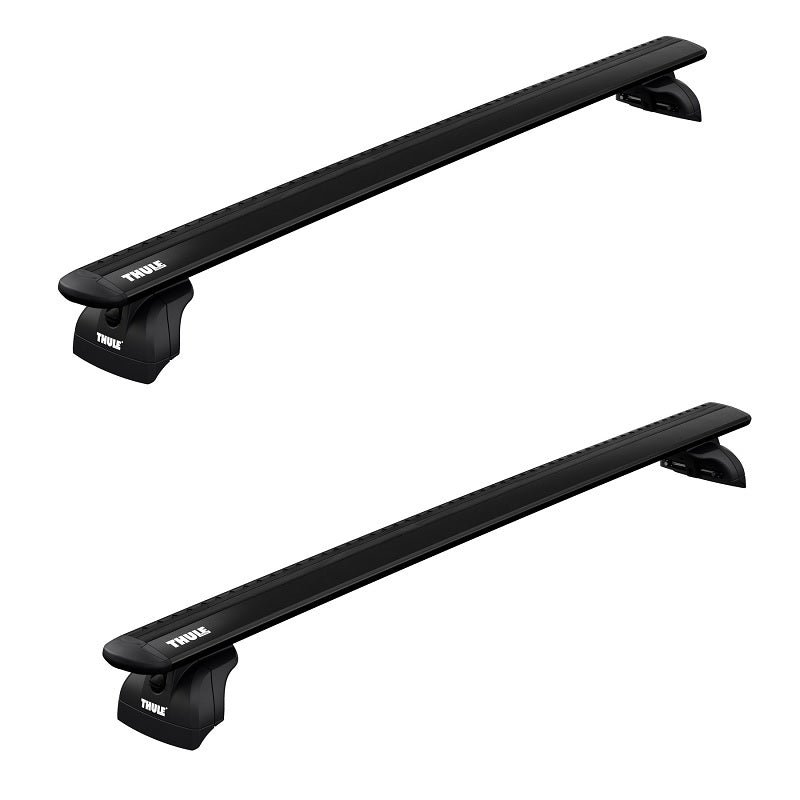
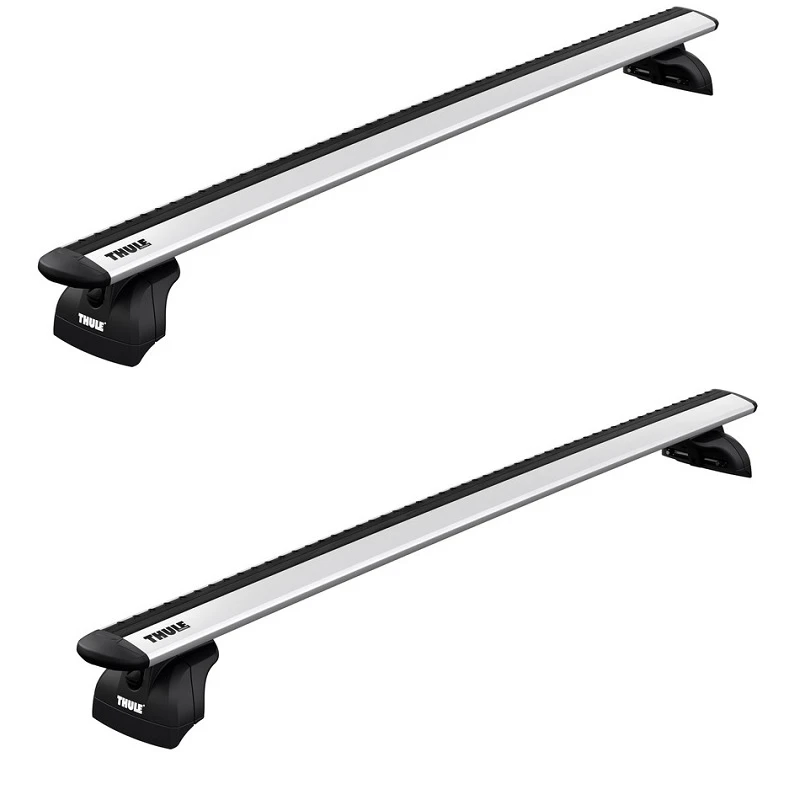
The WingBar Edge holds the ends of the crossbars within the footpack, creating a compact appearance and keeping the system close to the roof. This also helps reduce wind noise, because there's no T-intersection at the end of the bars.
The WingBar Evo uses adjustable feet that allow the bars to extend farther beyond the mounting points. This provides additional usable space, which can be valuable when carrying multiple accessories or larger equipment.
Both systems are available in black and silver and come in configurations designed for different vehicle roof types. Thule also offers various fit kits and packages to accommodate different vehicles.




Why Choose the Thule WingBar Edge?
The WingBar Edge is designed for drivers who want their roof rack to blend into the vehicle.
Because the crossbars don't extend significantly beyond the feet, the finished installation has a clean, low-profile appearance. The compact design also keeps the rack close to the roof, making it perhaps more visually appealing than the Evo.
The main trade-off is available mounting space. If you regularly carry multiple bikes, kayaks, or larger equipment, the shorter usable bar area may become a limitation.
The Thule WingBar Edge is a good fit if your priorities include:
- A sleek, low-profile appearance
- Keeping the rack close to the roof
- Reduced wind noise
- A clean look when the rack isn't being used
- Carrying one primary accessory at a time


Why Choose the Thule WingBar Evo?
The WingBar Evo takes a more flexible approach to roof rack design.
Its adjustable mounting feet allow more of the crossbar to be used, providing extra room for accessories. This can be particularly useful when transporting multiple bikes, kayaks, cargo carriers, or other outdoor equipment.
The Evo also features an integrated T-Track system. You just swing open the endcap and compatible accessories can slide on through along the top of the crossbar and attach directly to the bar. This makes positioning and changing equipment pretty straightforward.
The Evo may produce slightly more wind noise than the Edge because more of the crossbar extends beyond the feet. However, it's still a relatively quiet roof rack system.
The Thule WingBar Evo makes sense if you prioritize:
- More usable crossbar space
- Carrying multiple accessories
- Flexible accessory positioning
- Frequently changing your roof rack setup
- Transporting bikes, kayaks, cargo boxes, and other gear


Final Thoughts
Choosing between the Thule WingBar Edge and WingBar Evo ultimately depends on how you use your roof rack.
The WingBar Edge is focused on a streamlined, low-profile installation. It's worth considering if appearance, compactness, and quiet operation are your main priorities.
The WingBar Evo is geared more toward flexibility and carrying capacity. Its additional usable bar length and T-Track system make it well suited to drivers who regularly transport multiple or different accessories.
Both systems are available in black and silver and come in configurations for various vehicle roof styles. Specific weight capacity depends on the vehicle and specific rack configuration, but generally they can both hold the same amount.
If you've got any questions about the Evo, Edge, or anything else about your rack set-up, feel free to drop by the shop or give us a call. We're always happy to help you figure out the best rack set-up for your needs.
RELATED ARTICLES
View all

