

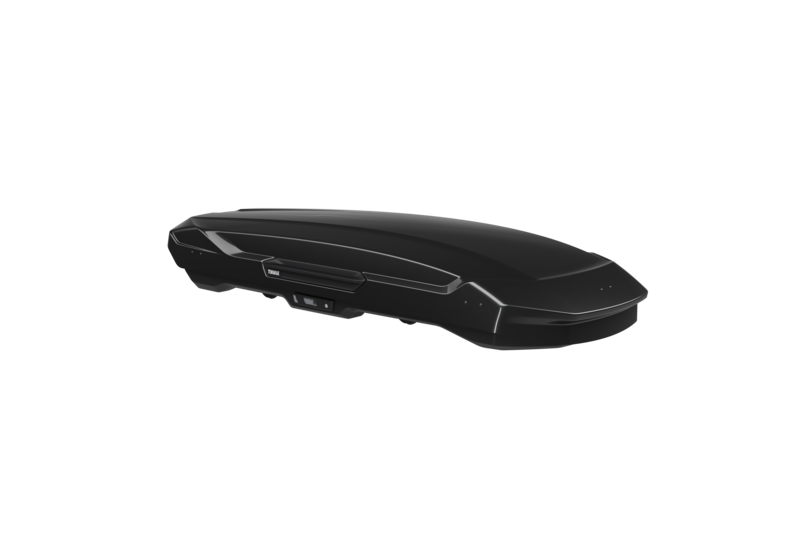





If you’re in the market for a roof box, one question we get asked constantly is: “Which Thule roof box should I choose?”
As a specialty roof rack retailer and longtime Thule fan, we know it’s not always a straightforward answer. With a wide range of sizes, features, and price points, the perfect roof box depends on your vehicle, what you’re carrying, and how often you’ll use it. In this guide, we’ll break down the key considerations to help you find the right Thule roof box for your needs.
Before you start browsing roof boxes, check if your vehicle already has cross bars installed.
Why it matters:
Thule cargo boxes attach directly to cross bars, so without them, you won’t be able to mount your box.
If you don’t have cross bars:
Tip: Even if you have cross bars, check their weight rating. Every roof box has a maximum load, and your bars need to safely support both the box and its contents.

Different boxes suit different purposes. Ask yourself: what will I carry, and for how many people? Common uses include:
Pro Tip: Before shopping, list what you’ll regularly carry. This will narrow your options and prevent paying for a box that’s too large, or too small, for your needs.
Not every box fits every car equally well. Here are some things to keep in mind:
Quick Check: Measure your roof’s usable length, width, and height. Compare it with the dimensions of the box to ensure it fits comfortably without interfering with doors, hatches, or your rearview visibility.
Thule boxes vary not only in size but also in features. Here’s what to look for:
Tip: If you’ll be installing and removing the box regularly, invest in a model with an intuitive mounting system (your back will thank you.)
Thule boxes range from entry-level to premium. Here’s how to think about it:
Remember: more expensive doesn’t always mean better for your specific needs. Focus on fit, capacity, and ease of use first.

Here is a table of popular Thule products, their features, sizes and prices to help give you a head start on your research:
|
Roof Box Family |
Sizes |
What is It? |
Price Range |
|
Thule Outbound |
One Size |
Small weatherproof soft case roof top carrier |
$139.95 + tax |
|
Thule Interstate |
One Size |
Medium weatherproof soft case roof top carrier |
$269.95 + tax |
|
Thule Sidekick |
One Size |
Small, hard sided roof box |
$419.95 + tax |
|
Thule Pulse |
Alpine, M, L |
Price point hard sided roof box |
$629.95 - $679.95 + tax |
|
Thule Force XT |
Sport, L, XL, XXL |
Fully featured hard sided roof box |
$749.95 - $949.95 + tax |
|
Thule Motion XT |
Alpine, L, XL, XXL |
Deluxe, fully featured hard sided roof box |
$979.95 - $1079.95 + tax |
|
Thule Vector |
Alpine, M |
Premium, fully featured hard sided roof box. |
$1799.95 - $1899.95 + tax |
Choosing the right Thule roof box is a combination of fit, function, and features. Start with your vehicle and roof bars, define what you’ll carry, measure your roof space, and then decide which features matter most. By thinking through your needs first, you’ll avoid paying for unnecessary features... or worse, buying a box that doesn’t fit your car.


